
Sciatica Treatment Northern Ireland: Relief Guide
Sciatica and lower back pain stem from nerve compression, disc issues, or muscle strain, causing radiating leg pain, numbness, and stiffness. Active Therapy Clinic, Northern Ireland’s leading award-winning clinic, delivers advanced treatment through Chartered, HCPC-registered physiotherapists serving patients throughout Northern Ireland, with clinic sites in Lurgan and Lisburn.
Sciatica causes sharp, burning pain radiating from the lower back through the buttock and down one leg, often with tingling, numbness, or weakness. Active Therapy Clinic’s Chartered and HCPC-registered physiotherapists provide expert multidisciplinary assessment and advanced treatment for patients across Northern Ireland, with appointments available Monday to Saturday at its Lurgan and Lisburn locations.
Sciatica causes sharp, burning pain radiating down the leg, often with tingling, numbness, or weakness, stemming from nerve compression in the lower back. Active Therapy Clinic serves patients throughout Northern Ireland, providing chartered, HCPC-registered physiotherapy assessment, targeted rehabilitation, and shockwave therapy to relieve symptoms and restore movement
What Is Sciatica and Why Does It Happen?
Pain traveling from the lower back or buttock down one leg describes sciatica. The discomfort follows the path of the sciatic nerve, the largest nerve in the human body, running from the lower spine through the hip and down the leg. Formed from several nerve roots in the lower back that merge much like small streams joining a river, this nerve carries signals across a long, vulnerable route. Irritation or compression anywhere along that path produces the radiating symptoms. Many patients in Northern Ireland describe during their first physiotherapy consultation.
Sciatica itself is not a diagnosis. It is a symptom, a warning sign that something else in the body is pressing on or irritating a nerve root. Identifying that underlying cause is exactly why sciatica treatment northern ireland patients usually begin with a thorough clinical assessment rather than generic exercises. In many cases, the culprit involves disc changes in the spine, which is where disc herniation physiotherapy becomes central to an effective recovery plan.
What Does Sciatic Pain Actually Feel Like?
Patients frequently describe a sharp, electric jolt or a burning line of pain running from the low back through the leg. Others notice a duller ache that worsens with prolonged sitting or standing.
Common descriptions include:
- A sharp or burning pain traveling down the back of one leg
- Electric-shock sensations triggered by certain movements
- Persistent low back discomfort accompanying leg symptoms
- Pain that intensifies with sitting, standing, or specific postures
Because symptoms vary so widely between patients, effective lower back pain relief Northern Ireland residents can rely on starts with pinpointing exactly which structures are involved before treatment begins.

What Are the Warning Signs of Sciatica?
Warning signs of sciatica center on the leg, not just the back. Pain typically radiates through the buttock and travels down one leg, frequently reaching the foot and toes. That distribution is the clearest clue something is compressing the sciatic nerve rather than simply straining a back muscle.
Many patients in Northern Ireland describe the sensation as a sharp, burning pain running down the back of the leg. Others notice pins-and-needles tingling, numbness, or a dull ache that intensifies without warning. These symptoms rarely stay confined to one moment; they shift and build as the condition progresses.
How quickly do sciatica symptoms develop?
Onset varies considerably from person to person. Some notice symptoms appearing suddenly, often after lifting or twisting awkwardly. For others the discomfort builds gradually over days or weeks. Movement, sneezing, and coughing commonly make the pain worse, since these actions increase pressure around the irritated nerve.
Is back pain alone a sign of sciatica?
Back pain by itself is unlikely to signal sciatica. Genuine nerve involvement almost always includes leg symptoms alongside, or instead of, back discomfort. Anyone experiencing only lower back tightness without radiating leg pain is probably dealing with a musculoskeletal strain rather than nerve compression.
Recognizing the difference matters because treatment approaches diverge sharply. A short checklist helps clarify what to watch for:
- Pain or burning sensation running down one leg, past the knee
- Tingling, numbness, or weakness in the foot or toes
- Symptoms that worsen with sitting, sneezing, or coughing
- Leg pain that outweighs any accompanying back discomfort
Clinicians experienced in sciatica treatment northern ireland patients rely on use this symptom pattern to distinguish sciatica from general back strain, guiding an accurate diagnosis before recommending a tailored rehabilitation plan.
What Causes Sciatica and Disc Herniation?
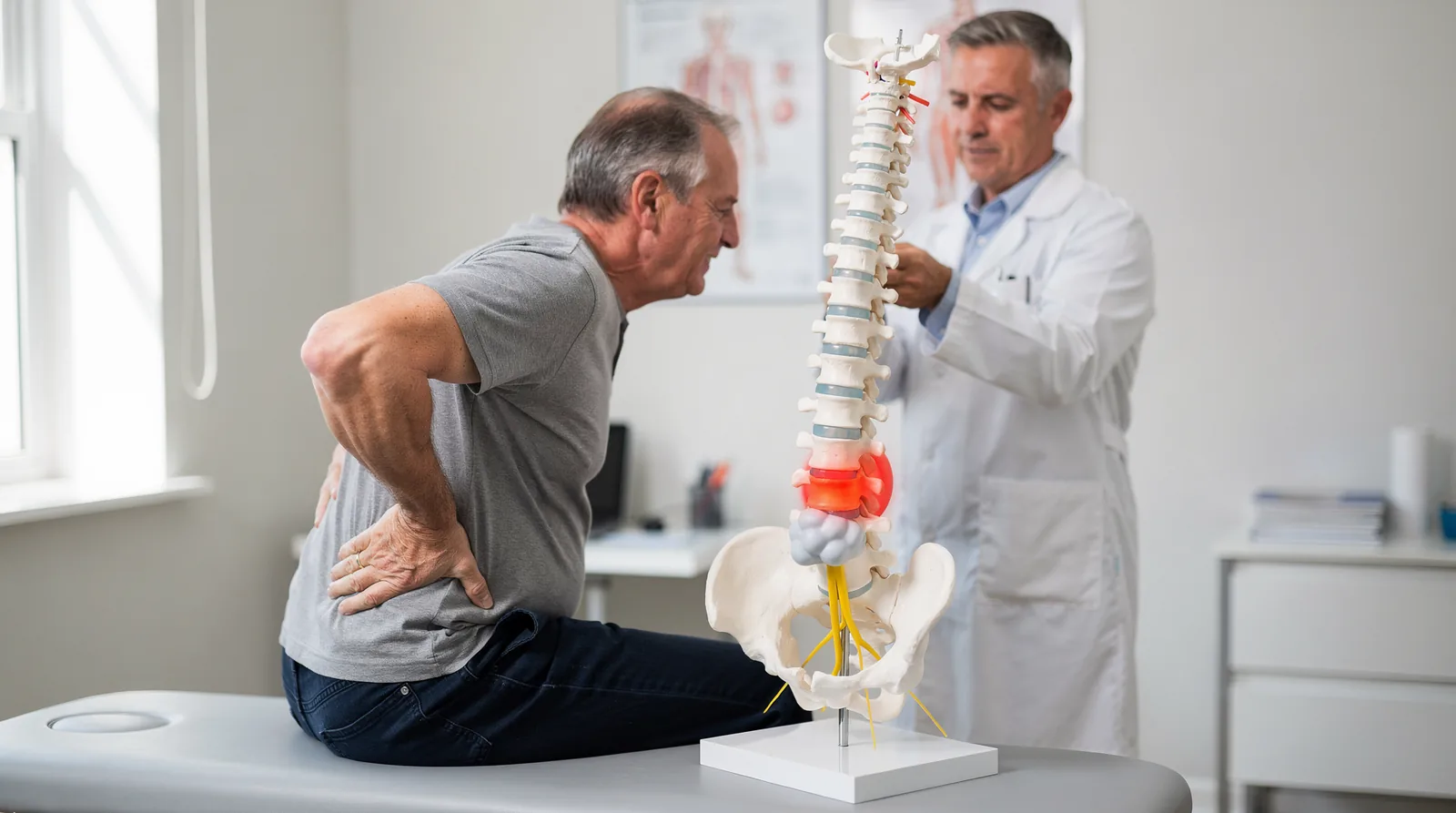
Sciatica signals that an underlying condition somewhere along the spine is irritating or compressing a nerve. Nerve roots exiting the lumbar spine converge between the buttock muscles to form the sciatic nerve, the body’s longest nerve pathway. Once irritated at any point along this route, that nerve sends pain, tingling, or numbness down through the leg, sometimes reaching the foot.
Disc herniation physiotherapy addresses one of the most common triggers behind this nerve irritation. A herniated disc occurs when the soft inner material of a spinal disc pushes against nearby nerve tissue, creating pressure that radiates outward. Other contributing factors include acute lumbar strain, chronic muscular stiffness, and general disc-related wear that builds gradually over time. Each cause behaves differently, so identifying the specific source of irritation matters before treatment begins.
Why Does Sciatica Make Daily Life So Difficult?
Many people find that sciatica turns ordinary tasks into obstacles. Sitting through a workday, driving on Northern Ireland’s roads, or simply settling into bed at night becomes uncomfortable or nearly impossible. This disruption to daily routine often pushes patients to seek assessment sooner rather than later.
What’s the Difference Between Back Pain and Sciatica?
Back pain stays localized to the lower back, while sciatica radiates along the nerve’s path into the buttock and leg. Recognizing this distinction helps clarify why some cases respond to general back care and others require nerve-focused intervention.
Common contributing conditions include:
- Acute lumbar strain from sudden movement or overexertion
- Chronic stiffness that builds gradually and restricts spinal mobility
- Disc-related discomfort, including herniation pressing on nerve roots
Active Therapy Clinic evaluates these underlying causes individually rather than treating symptoms in isolation. Patients across Northern Ireland seeking sciatica treatment Northern Ireland benefit from this root-cause approach. Resolving the source of nerve compression, not just masking the pain, supports lasting lower back pain relief Northern Ireland residents can rely on.
How Does Disc Herniation Cause Nerve Pain?
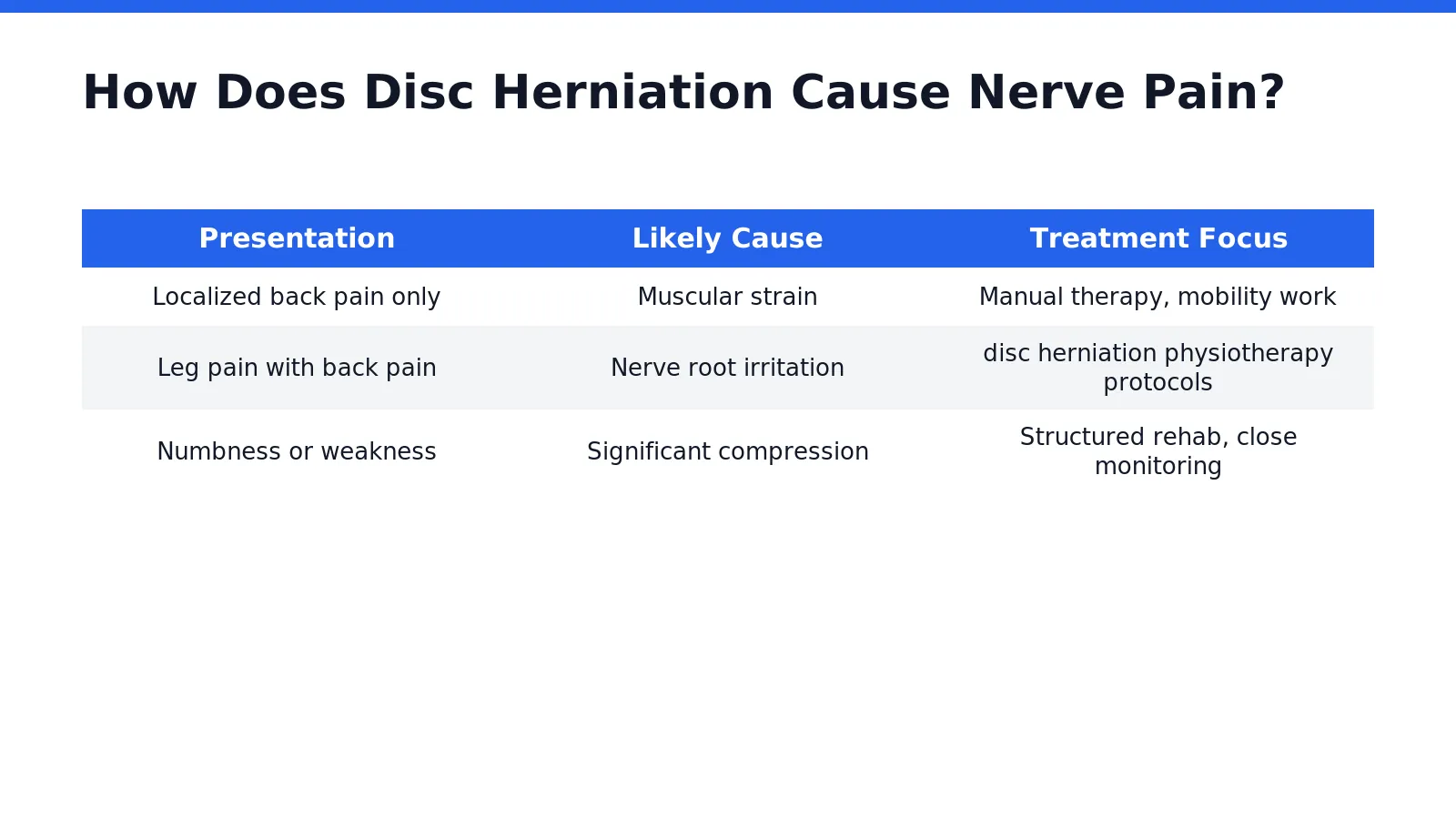
A herniated disc pushes soft inner material against nearby spinal nerves. That pressure sends pain signals down the sciatic nerve’s full pathway. Compression at the nerve root explains why discomfort rarely stays in the lower back. Instead, it travels along the buttock, thigh, and calf, often reaching the foot. Sciatica gets its name because sensation is generally felt along the course of the sciatic nerve itself, not just at the point of injury.
This pattern matters for anyone weighing treatment options across Northern Ireland. Pain location, not just intensity, guides a proper diagnosis and a structured rehabilitation plan. Radiating leg pain, numbness, or tingling signals that nerve involvement, rather than simple muscle strain, may be at play.
Why Does Sciatica Pain Radiate Down the Leg Instead of Staying in the Back?
Nerve compression disrupts signal transmission along the sciatic nerve’s entire length, so symptoms surface wherever that nerve travels. Patients often report back discomfort as secondary to the sharper, burning sensation running down one leg.
Chartered physiotherapy approaches this problem by addressing the nerve pathway as a whole, not just the lumbar spine. Clinical care for sciatica treatment northern ireland patients typically combines postural correction, targeted exercise, and manual therapy alongside treatment for neck stiffness and post-operative joint rehabilitation.
Disc-related nerve pain responds differently depending on severity and duration:
Reliable **lower back pain rel